

India’s Supreme Court (SC) recently struck down the country’s ‘electoral bond’ system that parties leveraged for political funding, introduced in 2017 under the majority of the Bhartiya Janata Party (BJP). Under this system, individuals and corporations could purchase electoral bonds with the State Bank of India (SBI) and anonymously donate funds to political parties.
What is Novel About Electoral Bonds?
The standard route for political party donations did not guarantee anonymity for donations exceeding 20,000 rupees. However, electoral bond purchases are anonymized no matter the donation amount. Consequently, most parties, especially the BJP began acquiring funding through this mode.
In the bill that introduced electoral bonds, a series of other changes were also made, such as:
- Limitations on donations from corporate entities were removed.
- The requirement for companies to declare their donations was removed.
- Foreign companies were now allowed to fund Indian political parties through India-based subsidiaries.
The BJP-led government essentially “institutionalised corruption” and “backroom lobbying.”
Where do Different Entities Stand on Electoral Bonds?
The electoral bond infrastructure has been highly criticized since its inception in 2017. Several entities responsible for protecting fair elections and democratic values in the country warned the government against implementing such a scheme from the beginning.
- Most critics concurred that it was a tool that the BJP sought to use to gain unfair advantages over its competitors.
- The Election Commission (EC) stressed that it would hinder electoral transparency.
- The Supreme Court had declared it unconstitutional early on.
- The Reserve Bank of India (RBI) noted that electoral bonds could be used for money laundering.
- The current Supreme Court verdict declares void the claim that the system is needed to prevent corruption in political funding.
One would not want to rely solely on an appeal to authority. Still, is it likely that the BJP, known for pushing legislation through with brute force and poor consultation with stakeholders, was right in implementing the electoral bond scheme despite warnings from experts in the country’s apex legal, regulatory, and financial institutions?
Just like this question, many other questions can be raised that tackle the significance of the verdict and released data. In sum, despite the media’s ignorance of the issue, we, the common public, must understand its significance and popularize it.
Why Elections are No Longer Fair – BJP’s Unfair Advantage
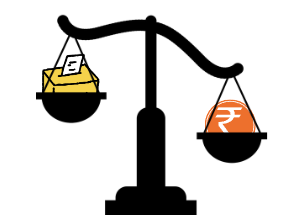
An important caveat is forgotten in the discussion of the system’s transparency. While the public cannot see who donates and to whom, the SBI can, which means so can the elected government.
In a country where financial rules and office raids have been performed for political motivations for over three decades now, such access to data is bound to encourage donors to donate to the BJP to gain privileges and are dissuaded from donating to other parties lest they have their offices and warehouses raided.
Thus, SC demanded the SBI the data release. Even in this request, albeit dismissed, the SBI attempted to protect the BJP by stalling the decision to the point where it would not matter—they requested time till 30th June for them to release the information. However, India is set to face its national elections in April-May. Releasing such information a month after the elections is nonsensical.
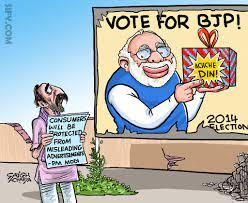
The partial data that has been revealed so far show the unfair advantage BJP has been racking up—amounting to 47-55% of all donations, far ahead of its second and third-place competitors by over three times. Access to such funding inherently gives them an advantage over other parties. Unsurprisingly, concepts like “Brand Modi” come up, shedding light on the spending and marketing of the party and prime minister.
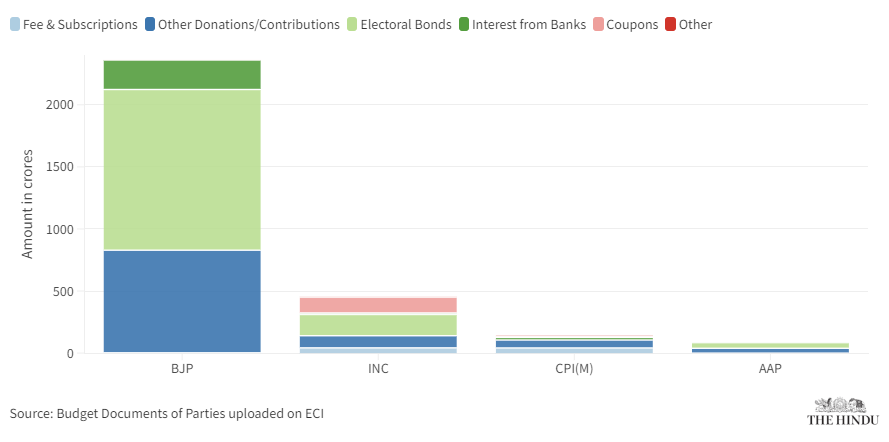
Such spending trumps making meaningful promises and progress, many of which have not been met since 2014. Alternatively, the strength of the marketing diverts voters’ attention to the perceived failures of other parties and jingoistic nationalism. Much of this funding also propagates more intimate propaganda through WhatsApp group networks and widespread control and ownership over India’s major mainstream media outlets.
These developments have self-reinforcing effects. The funding allows them to consolidate power in ways that trump free media. Under normal circumstances, an independent media would have dragged the government through the mud by now. However, control over media houses and funding dynamics explains why they are not as loud as they were during the previous government’s scandals.
BJP’s Electoral Bonds Introduction Institutionalised Bribery
The main finding of the data and other chronological events shows that income tax and Enforcement Directorate (ED) raids are politically tied to the BJP. It is not that in all cases the BJP knocked at their doors to acquire money; such dynamics also create a political economy where companies feel compelled to make donations to protect themselves or extract favours. This is not just a theoretical argument but one that plays out in practice dozens of times. A few examples are highlighted ahead.

“Contributions made by companies are purely business transactions made with the intent of securing benefits in return” [Supreme Court]
| Company | Purchase of Electoral Bonds | Significant Event |
| Future Gaming and Hotel Services (“Lottery King”) Other Notes: many have also pointed out that their reported net profits have been lower than their donation amounts. | Top buyer, purchased on several occasions. 07 April 2022 – Rs. 100 crore October 2023 – Rs. 65 crore | Several instances of income tax, ED, and corruption problems. 02 April 2022 – ED raid October 2023 – income tax raid |
| Vedanta (mining company) Other Notes: Vedanta is a subsidiary of a London-based company that was not allowed to donate to political parties until BJP’s amendment of financial rules. | Purchased on several occasions. Acquisitions and awards closely followed or were followed by bond purchases. | Several instances of income tax, ED, and corruption problems. Acquired several national projects under BJP state/central governments. |
| Haldia Energy | Purchased on several occasions, with significantly increasing amounts and frequencies in recent years. | Purchases are closely timed with acquisitions of state projects and awards, as well as corruption scandals. |
| Megha Engineering Infrastructure | Purchased on several occasions. April 2023 – Rs. 140 crore. | Secured key projects with the Ministry of Defence and other government objectives. April 2023 – secured the important Thane-Borivali Twin Tunnel project. |
| Jindal Steel & Power | 7 October 2022 – Rs. 25 crore | 10 October 2022 – secured a formerly government-owned coal mine. |
| Dr. Reddy’s | 17 November 2023 – purchased electoral bonds. | 13 November 2023 – income tax raid. |
| Aurobindo Pharma | 15 November 2022 – purchased electoral bonds. | 10 November 2022 – the managing director was arrested. |
| Torrent Power | January 2024 – purchased electoral bonds. | March 2024 – acquired a Maharashtra solar project. |
Many other companies also display these trends, with a propensity of companies that are facing ED and income tax investigations to donate more than others. This list excludes shell company-related corruption, unregistered companies’ donating, Ambani and Adani, and is rather surface-level. Many other analyses combine data and timelines to produce more shocking revelations that should alarm us voters.
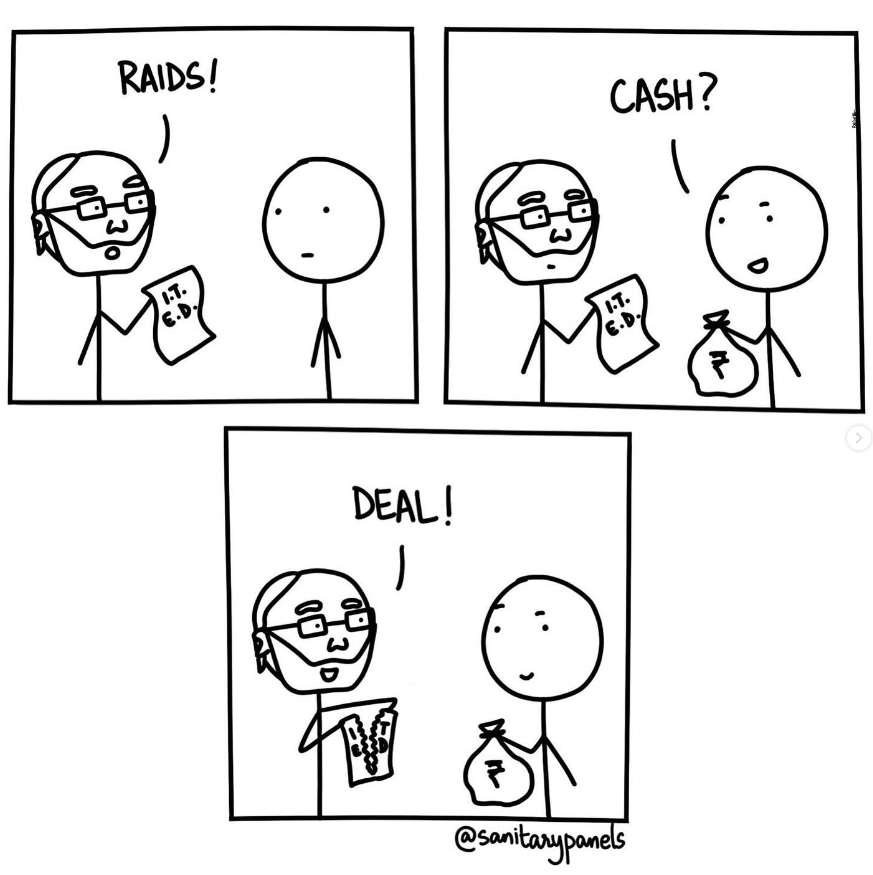
Evidently, the BJP is aware of and uses corruption that is enabled through the electoral bond system. When the electoral bond system worked against them, their leaders lashed out, asking opposition parties and corporate entities to be public about their donations like in West Bengal. Yet, they maintain silence on their own end.
Ironically, the introduction of the electoral bond system was argued as a move that would curb black money, a similar argument resting on digitalization placed during the government’s demonetization in 2016 that failed to achieve its goal.
This itself functions as propaganda where BJP attempts to make itself seem like a monolith of hope against corruption when its actual work is no more than public relations, marketing, and window-dressing exercises.
Democracy for the Capital, of the Capital, by the Capital

A significant implication of such funding and election use is that it created a system that was no longer representative of “one man, one vote,” but rather, shifted the value to corporations and their contributions.
One would imagine that the public would recognize these issues and vote them out if they understood that they were not representing the common public. However, the BJP is fortunately placed as they fool the masses by appealing to their seemingly spiritual sides through divisive politics. It continues to gain votes by waving the saffron flag than by any other meaningful indicators. In reality, even Hindutva politics largely acts as a mask for the government in carrying out capitalism that harms the average Indian.
“I do Hindu politics openly. What’s the problem with that? […] What’s the problem in doing Hindu politics?”
[BJP Chief Minister of Assam]
Moreover, the volume of funding allows for a level of political marketing that effectively convinces an adequate voter base that the party appropriately represents them.
In reality, corporate votes start to influence the decisions more than the common public. This is already a peril that the American government faces because of its lobbying system, with a study highlighting that all or most of its policies are largely influenced by corporations rather than people or advocacy groups.
Indian Nationalism and Economic Growth
Many Indians hold back from criticizing India’s corporate environment because it feels like a nationalistic tenet to support and defend them. India is one of the largest countries to free itself from the clutches of harsh imperialism. In previous decades and even today, it is often categorized as a backward country and critiqued in often racist ways.
Among its many issues, economic problems persist. It is no surprise that we want to report hints of progress that we sense proudly. We have also grown up learning the powers and greatness of multinational corporations—although ironically, given their uncountable harms.
Combined with the BJP’s so-called fight against corruption, an atmosphere is also created that tries to make us believe that not only are Indian corporations growing but that they, especially the ones friendly to the elected government, are law-abiding, tax-paying, ethical businesses. Otherwise, even national companies that criticize the government are accused of corruption.
It essentially seems as though the BJP’s voter judges whether a company is corrupt based on whether it supports the government. Countless examples can elucidate this. Some recent ones include the nationalist backlash at the reports of Hindenburg Research about the Adani Group, Panama Papers, and more. In contrast, most of their voters have uncritically supported raids against BBC after its documentary on Modi’s role in Gujarat and Amnesty International for alleged financial issues.
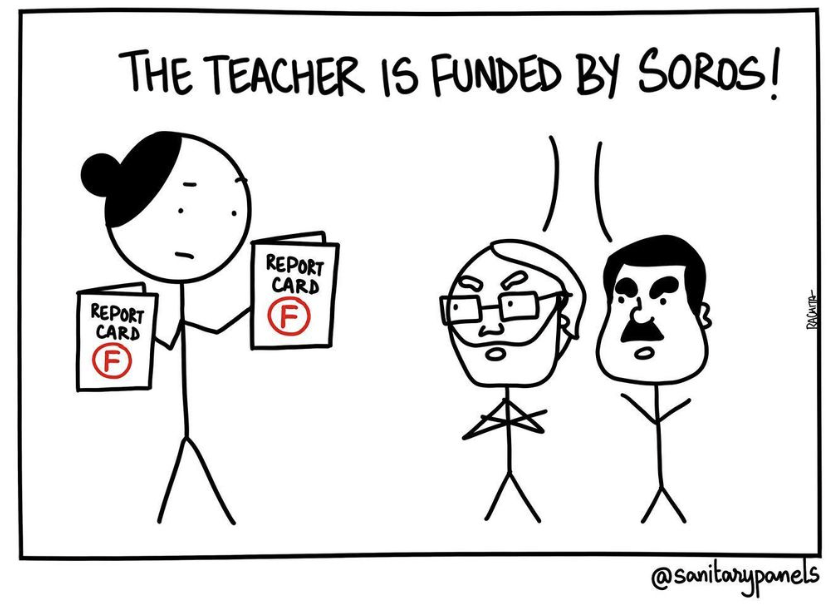
It is also not infrequent for me, a student voicing critical thoughts, to be accused of having an agenda, propaganda, and sometimes even funding for opposing the BJP. Ironically, this blog runs on a loss, and funding getting paid to do the right thing would actually have been helpful.

Donate to Staying Vigilant
The Vigilant Mind is a non-profit blog devoted to spreading knowledge, advocacy, and the author’s personal experiences and tips. You can support the blog with your donations or sharing the articles forward! Thank you for your consideration and contributions.
$2.00
Next Steps
However, this SC verdict should be a wake-up call to understand that being Indian, post-colonial, and pro-government is in no way an indication of ethics or anti-corruption. Like every other country, the growing corporation and political competitor are bound to form alliances toxic for the common person.
Identifying these tenets and voicing concerns against corporations and the BJP needs to be the immediate next step for the common public. With the elections coming up, we must understand that the information we see about parties is not an objective review but a function of their funding and existing power in spreading certain information over others.
Much explicit (through other articles) and implicit (through articles like this one) work strongly makes a case for the undemocratic and unfair nature of BJP’s operations. So, no matter how appealing its marketing may sound, it’s time to ask: Why is this true? Why are they trying to convince us of this? What can I do to find the truth?
It’s time to realize that the party claiming to fight corruption all these years has repeatedly resorted to and kept itself in power through well-hidden and unique forms of corruption marketed to its fanbase as innovative or misunderstood strategies.
It’s time to raise our voices accordingly. It’s time to vote accordingly.
Like what you read? Enter your email to subscribe for new post updates and commit to staying vigilant!
 The Vigilant Mind