
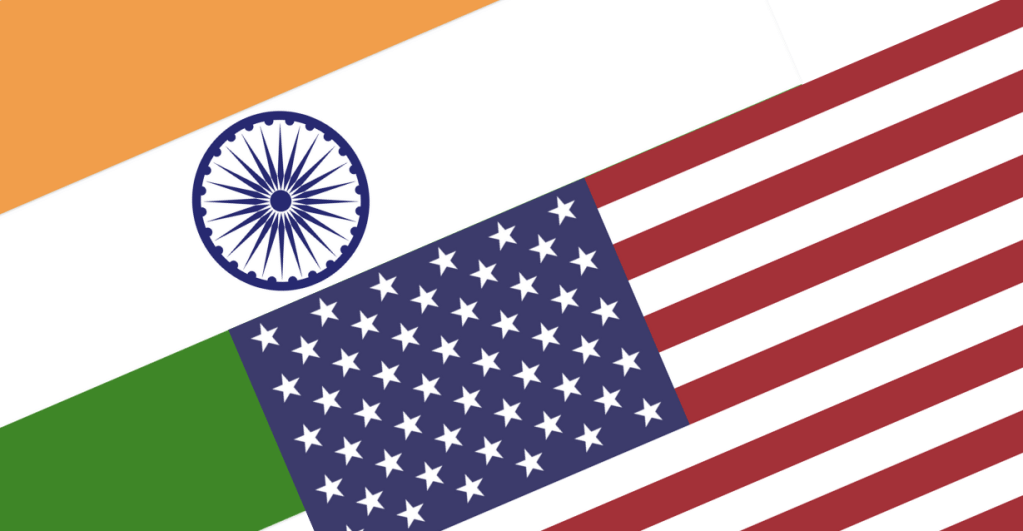
The last few years of developments in America and India have been alarming. Advancing right-wing politics—the so-called cultural awakenings—in both states challenge democratic norms and institutions.
Many have written about this at length and vocalized to advance an understanding and rally people to make informed voting decisions in subsequent elections. However, my observations have been disappointing; many commentators and activists, including myself formerly, took up the wrong talking points and even incorrect analyses.
Both states will face general elections next year, so re-aligning our conversations is increasingly essential.
Highlights:
- The United States and Indian politics have a few interesting similarities that are important to highlight in the face of the coming general elections next year.
- It is not enough to criticize the successful right-wing divisive (populist) political leaders in the two states — the opposition parties had many problems and failures.
- Voters need to vote and do so smartly. Voter turnout in America is divided across demographics, hurting the Democratic Party as Dem-leaning turnout is low. The ruling party won in India because the opposition votes were divided across parties, not because most of the country wanted them in power.
- These trends are emerging globally and raise questions about the concept of democracy itself.
The Indian and American Contexts
The Trump and Modi administrations are known for their divisive, nationalist, and anti-democratic approaches. The dynamics in both states are a bit different today, though, as Trump’s November 2020 re-election was unsuccessful, while Modi’s May 2019 election was successful.
COVID-19 likely prevented perpetuating similarities. Under normal circumstances, leaders like Trump and Modi generally win a second election. Modi’s re-election was spared of the doom that befell upon the government as India’s COVID crisis worsened under the constraints posed by its population size, weak healthcare sector, somewhat careless public, and severe political leaders’ incompetencies.
The same was not true for Trump, who faced the brunt of COVID and economic crises. After all, Biden’s 51.3% victory was not a clean sweep win.
Nevertheless, understanding the dynamics of Republicans’ success and support base will prove helpful. More importantly, though, this article decentres our focus on criticizing these leaders and understanding their success and the opposition’s failures better. I chose to reflect on India and USA together because of the many similarities I saw and my research interest (based on experience and relevance) in the two states.
Understanding Trump and Modi’s Politics
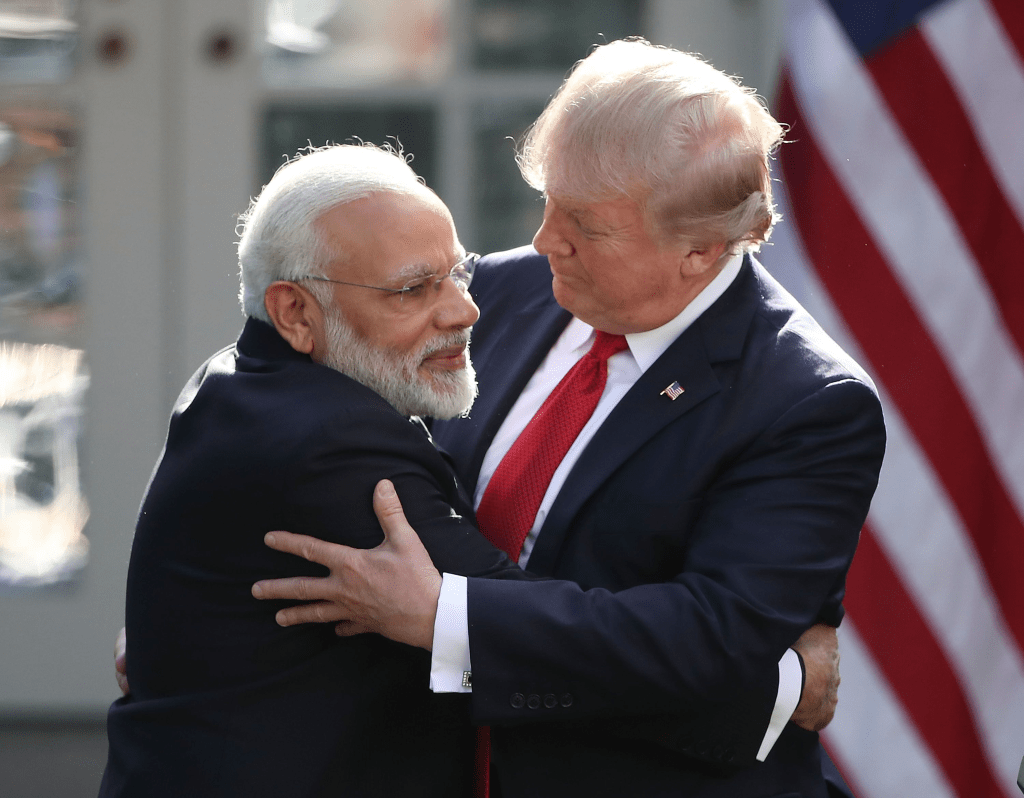
Many people, especially self-identified liberals, endlessly criticize right-wing regimes (Trump, Modi…). While there are merits in these arguments, many of them are surface-level claims and are often merely outrage with little pragmatic direction to change minds or achieve change; they risk being performative activists, or slacktivists. There needs to be a change in how we narrate our thoughts about unfavorable governments close to elections. An understanding of their electoral successes and positions needs to be strengthened.
The dominant narratives around right-wing populist governments are that they are a response to ‘political correctness,’ ‘wokeness,’ and envision a cultural renaissance. In the case of Trump, some scholars have associated his success specifically with these forces and termed the phenomenon as ‘whitelash.’ However, whitelash is merely a tool Trump used, where populism forms the larger strategy.
Populism
Populism is politics where leaders pretend to champion “the people” but exercise divisive nationalist rhetoric that divides society based on class, caste, gender, religion, or ethnic background. In the case of the US, it is largely skin color; for India, it is religion.
An appropriate understanding does not stop here either. While I think that these governments are populist, anti-democratic, and divisive, their followers think of me as a propaganda peddler, with some even accusing that I get paid (payment would have been nice, though, because this blog does not run for free nor yield revenue).
Redefined Nationalism
The media and intelligent political strategies are crucial for populists in consolidating their support base. The politics of these people have changed nationalism from being pro-nation or pro-people to calling for the unconditional support of the leaders – it has led to the creation of concepts like ‘Trumpism’ and ‘Modiism.’
Read more: ‘Nationalism Redefined.’ A series of thoughts on taking back what ‘Nationalism’ means from anti-people extremists.
Abusing Economic and Social Issues
Trump and Modi abuse issues that society faces, create issues that don’t exist, and scapegoat other sections of society. In the US, Trump villainized immigrants and people of colour, and in India, Modi targets the Muslims. These criticisms are common in mainstream rhetoric, but deeper analysis is warranted. How did these narratives succeed, and why do they still perpetuate?
Misinformation and Disinformation
Trump and Modi’s information systems successfully communicated to their supporters that despite being a majority in their state that controls most of its businesses and institutions, they are the ones under threat from the state’s minorities.
In India, the ruling party has a strong network of WhatsApp groups and interpersonal communication channels and directly controls and influences a series of strong media channels.
Read more about Indian journalism and news channels that are directly controlled, financially coerced, and influenced by the ruling government. This post has lessons for broader media consumption, regardless of country, too. Read more: ‘When Journalism is Sold: Lessons from India.’
Trump’s team also used social media and news algorithms to market themselves and successfully secure votes. S. S. Singh’s book ‘How to Win an Indian Election’ outlines many similarities between Trump and Modi’s strong information dissemination campaigns that won them their elections. It’s a read I strongly recommend.
It is not pure hatred that wins these politicians elections but the gradual process of engineering what has become pure hatred. Yes, both Trump’s and Modi’s electoral strategies comprise hate. But outright hate forms only part of the strategy. Fallacies and twisted information make listeners interpret them as facts. How can we convince a Trump or Modi voter to “stop hating” when they don’t even think of their beliefs as “hate” but as “service to society” and “nationalism”?
There are many quirks with this but the most problematic one is associated with the effects of false information. Populist politicians divide society, throwing their supporters into echo chambers and perpetuating polarization. The result is lies’ success. When you’re only exposed to right-wing propaganda and have been taught by those you admire that the opposition lies to you, you accept what you see at face value. When this happens, even debunking their lies and counter-propaganda fails – most of it doesn’t even reach the audience that internalizes lies, and other debunking is simply ineffective.
Weak Opposition Parties
The Trump and Modi administration receives criticism from various people, organizations, institutions, and countries. But why did they win the elections then? Their success implies others’ shortcomings. Just criticizing them is insufficient. Mainstream rhetoric needs to stress more on developing strong opposition parties with strong electoral strategies and rebuilding democratic pillars – independent media, election commission (more relevant in the context of India), civil society organisations, and more.
Trump’s election is not solely because of his populist rhetoric, as many suggest. Hillary Clinton was a poor choice in many regards. The Clintons had an infamous history, and the Republicans did a great job highlighting those problems and scandals. The Democrats objectively did a poor job of solving the nation’s issues. Their electoral strategies were also inferior, technologically inept, and out of touch with the people.
In India, who would want the Indian National Congress in power when their reputation had been tarnished because of several scandals? Arguably, income tax raids and election regulation against BJP’s opponents are done discriminately, but BJP’s naïve voters won’t believe this, and the supremacists will be happy about it. Nevertheless, opposition parties can perform better if they show their successes, fight allegations, prevent fallouts and scandals, and highlight institutional discrimination.
Voter Turnout, Demographics, and Other Dynamics
For voting to be effective, voters need to vote. Trump’s election was partially successful because he moved supporters to the polling booths. Taking Pew Research Centre’s data on voter demographics, young people and non-Whites overwhelmingly vote Democrat. However, these groups also had the lowest turn-out in the 2016 Presidential elections.
| Age Group | Voter Turnout |
| 18-29 | 43.4% |
| 30-44 | 56.9% |
| 45-59 | 66.2% |
| 60+ | 71.4% |
Moreover, the working class, where the voting propensity for Trump was comparatively higher, saw their turnout increase from 2012 to 2016, while other groups’ turnout decreased. Voter turnout is an important consideration in the US but this is one area where US and Indian politics diverge. There are more reflections about American democracy in the last section, where I reflect upon the concept of Democracy entirely than in this section.
The 2019 Indian elections also recorded the highest-ever voter turnout (67%), indicating successful calls by the campaigners. There are no significant demographic differences among BJP’s voters, except non-Hindus and professional degree holders being less likely to vote BJP.
It is often reiterated that India’s politics produced a majoritarian government. However, there are some misleading facets about how this came to be. If we were to add the votes for ‘Congress’ and ‘Others’ against ‘BJP,’ then BJP would lose. BJP’s victory is not because more than half the country wants them in power; it’s because they won the greater percentage share individually (BJP receiving 37.76% alone and 45% in coalition) while other votes are divided across parties and candidates.
A reason for this vote division is identity politics. Voters should not think narrowly but consider wider election outcomes. Voting should be collectively strategized so voters don’t waste their votes.
A noted success has been that BJP has done better than other parties in consolidating their voter base into a Hindu[tva] nationalist agenda across ideological, gender, and caste lines. Voters and opposition must not divide their votes and lose the general elections. The BJP has been known to engage in divide-and-rule politics for decades; it is not a recent feat for them. So, the opposition must learn to cope and prevent this fast.
Reflections on Democracy as a Whole
I write about India and the USA in this post, but these patterns emerge globally – far-right parties consolidate votes and win elections in the name of nationalism, where they scapegoat other social groups and erode democratic values and institutions. These trends have not spared even developed Western states, which are conventionally known to champion democratic thought and practice.
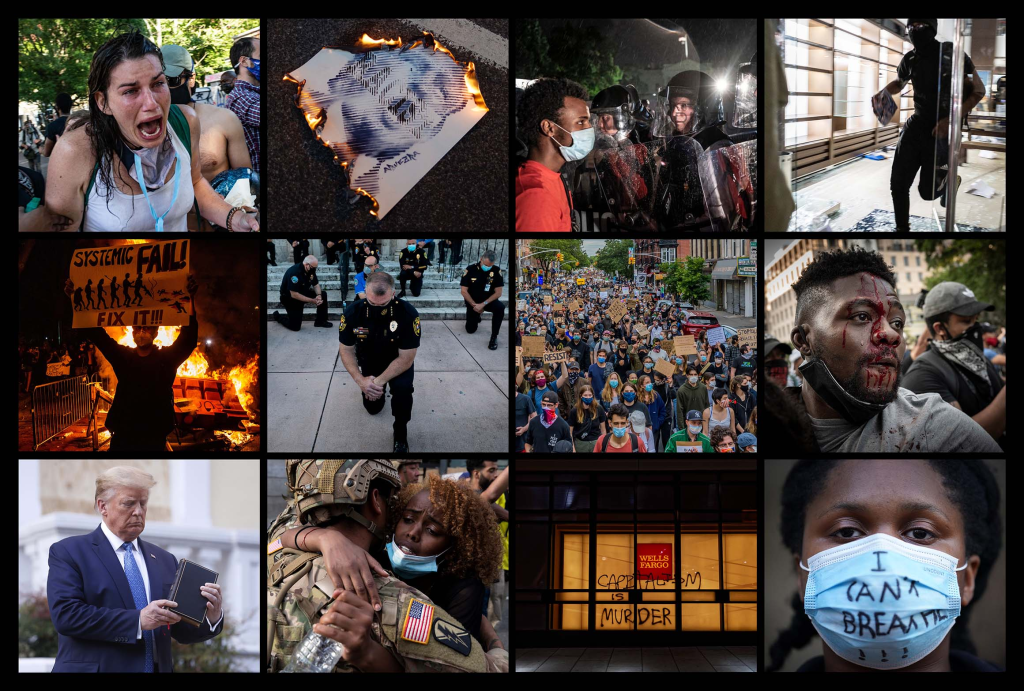
If even those nations suffer horrible, overt, and covert forms of democratic backsliding (a formal process where democratic values and institutions are made to erode), are the cases I talk about and the solutions I extend adequate, or is the very concept of democracy flawed?
Democracies are imperfect by design. There are many reasons for this. In some contexts, democracies have flaws because the people are not rational, upon which the assumption of voting rights is based.
I see the campaigning and voting process as shopping in a retail store. Companies compete to sell their products and their focus isn’t only on quality but also on perceptions, design, and marketing. Companies try to sell an inferior quality product with marketing gimmicks. Politicians are no different.
So, people aren’t rational, because why would they vote for governments that are bad for them, that lie, and whose electoral successes are not a result of individuals’ rational choice but good marketing.
In other contexts:
- Democracies may be a form of legitimized dictatorship of the rich classes, arguing that voting is merely an illusion of choice. This seems more applicable for the US than India as it’s a two-party system and has fewer overt issues – the US is not on genocide watchlists (domestically only, but public opinion hasn’t really affected foreign policies). For example, one can look at how the Democratic Party, supposedly left-leaning, voted with the Republicans against rail strikes.
- In the case of India, democracy can produce an outright majoritarian government where minorities suffer under so-called legal and constitutional arrangements.
- Or, democracy may generally just be a vote-seeking competition where society’s problems are weaponized as means, not ends.
It is impossible to close this discussion without a book worth of thoughts, but beginning the discussion is important and that is done. To conclude, I echo the answer given by my Comparative Public Policy professor at the University of Sussex when I asked her what we can do about democracy in the face of populism being a reflection of democracy’s inherent failures – “that’s a question we political scientists are still trying to answer.”
Like what you read? Enter your email to subscribe for new post updates and commit to staying vigilant!
References
This piece is the product of several months of observations, reflections, and synthesis of coursework and discussions across my stay at the University of Sussex (UK) and the American University of Sharjah (UAE). Some recorded references are provided below and others are hyperlinked throughout the text of the article:
- Alcoff, L. M., and Mohanty, S. P. (2006). ‘Reconsidering identity politics: An introduction,’ Identity Politics Reconsidered. Palgrave Macmillan, pp. 1-9.
- Blake, J. R., & Adolino, C. H. (2011). ‘Immigration policy,’ In Comparing public policies: issues and choices in industrialized countries, CQ Press: Washington, D.C., pp. 100-158.
- Howell, W. G., & Moe, T. M. (2020). Presidents, populism, and the crisis of democracy. University of Chicago Press.
- Mudde, C., and Kaltwasser, C. K. (2012). Populism: corrective and threat to democracy. In Mudde, C., and Kaltwasser, C. K. (Eds.), Populism in Europe and the Americas: Threat or corrective for democracy?. Cambridge University Press, pp. 205-222.
- Singh, S. S. (2019). How to win an Indian election: What political parties don’t want you to know. Penguin Ebury Press. ISBN-10: 0143446843.
- Spruyt, B., Keppens, G., & Van Droogenbroeck, F. (2016). Who Supports Populism and What Attracts People to It? Political Research Quarterly, 69(2), 335-346. Retrieved January 29, 2021, from http://www.jstor.org/stable/44018014
- Plagemann, Johannes, & Sandra Destradi. (2019). Populism and Foreign Policy: The Case of India. Foreign Policy Analysis, doi: 10.1093/fpa/ory010
- The Vigilant Mind Previous Articles on Indian Politics – https://thevigilantmind.com/category/society-community/social-sciences/indian-politics/
- The Cost of Being Apolitical – https://thevigilantmind.com/2021/05/16/the-cost-of-being-apolitical/
 The Vigilant Mind
It is easy to see how quick comparisons are drawn without delving into the discussion with an objective perspective, willing to consider the benefits or trade-offs.
Looking forward to more content!
LikeLike
[…] our votes. BJP has a lineup of influential speakers, but we need to put facts over influence, and the opposition parties need to level up their campaigning and delivery, […]
LikeLike